7 Steps to Prepare a Winter Grow Light Schedule
Winter months challenge indoor gardeners when natural daylight dwindles to less than 10 hours per day. Most fruiting crops and leafy greens require 12 to 16 hours of quality light to maintain photosynthesis rates above 20 micromoles per square meter per second. Learning how to prepare a grow light schedule for winter prevents etiolation, bud drop, and nutrient lockout caused by insufficient photosynthetically active radiation during December through February.
Materials
Select full-spectrum LED panels rated between 400 and 800 watts for a 4×4-foot grow area. Fluorescent T5 fixtures work for seedlings and microgreens but lack the red wavelengths (620-680 nm) needed for flowering crops. Hang fixtures 12 to 18 inches above foliage using adjustable ratchet hangers rated for 50 pounds.
Amend soil with a 4-4-4 organic meal combining feather meal, bone meal, and kelp. This balanced NPK supports vegetative growth without excessive nitrogen that promotes weak stems. Add dolomitic lime at 2 tablespoons per gallon of substrate to buffer pH between 6.2 and 6.8. Incorporate mycorrhizal fungi inoculant (Glomus intraradices) at transplant to enhance phosphorus uptake when root zone temperatures drop below 65°F.
Install a 24-hour programmable timer with 15-minute intervals. Digital controllers with dimming functions allow gradual sunrise and sunset transitions that reduce transplant shock. Use a lux meter or PAR meter to verify light intensity at canopy level reaches 300-600 micromoles for leafy greens or 600-1000 micromoles for tomatoes and peppers.
Timing
USDA Hardiness Zones 3 through 6 experience last spring frosts between April 15 and May 31. Begin indoor winter schedules 8 to 12 weeks before the anticipated last frost date to produce transplant-ready seedlings. Zones 7 through 10 maintain milder winters but still lose 4 to 6 hours of daylight compared to summer solstice peaks.
Start brassicas (cabbage, kale, broccoli) under lights in late December for early March outdoor transplanting. Tomatoes, peppers, and eggplants require 6 to 8 weeks indoors, so initiate schedules in mid-February. Perennial herbs like rosemary and thyme maintain productive growth indoors year-round when provided 14 hours of supplemental light daily.
Monitor local sunrise and sunset times using NOAA solar calculators. Supplement natural window light to reach target photoperiods. A south-facing window in Boston provides approximately 9 hours of direct sun on winter solstice, requiring 5 additional hours of artificial light for short-day plants.
Phases
Sowing: Germinate seeds under lights set to 18 hours on, 6 hours off. Maintain substrate temperature at 70-75°F using heating mats. Position lights 2 to 4 inches above seed trays to prevent damping-off caused by etiolation. Once cotyledons emerge, reduce light-to-canopy distance to maintain compact hypocotyl length under 1 inch.
Pro-Tip: Mix seed-starting medium at pH 5.8 to 6.0 using 50% peat moss, 30% perlite, and 20% vermiculite. This ratio improves cation exchange capacity and prevents waterlogged conditions that suffocate emerging radicles.
Transplanting: Move seedlings with two true leaves into 4-inch pots containing potting mix amended with 1 tablespoon of 2-3-1 fish emulsion per gallon. Increase light duration to 16 hours for vegetative crops or 12 hours for short-day flowering plants like chrysanthemums. Raise fixtures to 8 inches above new transplants for 48 hours, then lower to standard 12-inch height.
Pro-Tip: Water transplants with a solution containing 100 ppm nitrogen from liquid kelp to boost auxin distribution and encourage lateral root development within 7 days.
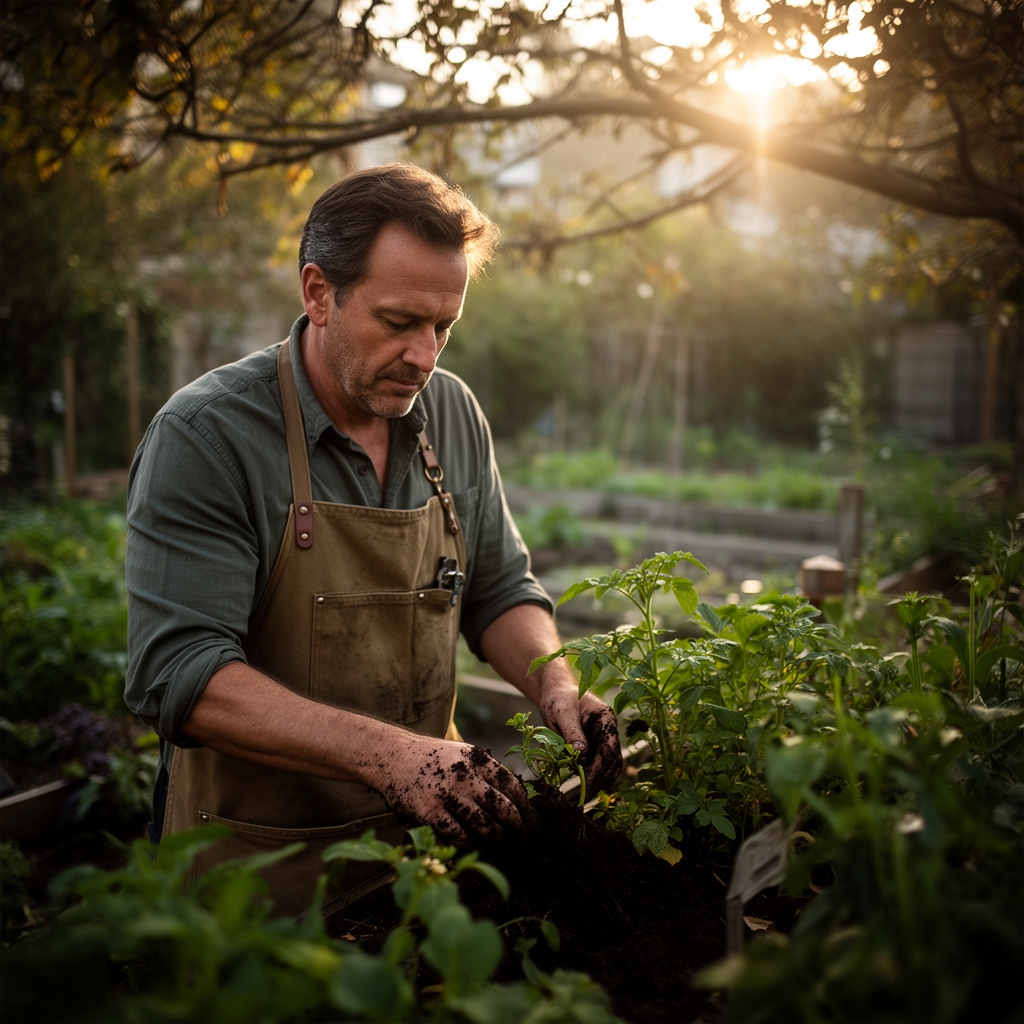
Establishing: Mature plants require consistent photoperiods. Leafy greens thrive on 14-16 hours daily. Fruiting crops need 12-14 hours with higher intensity (800+ micromoles). Adjust timers to activate lights at 6:00 AM and deactivate at 10:00 PM for a standard 16-hour schedule. Rotate plants 90 degrees every three days to ensure even canopy exposure and prevent phototropic lean.
Pro-Tip: Prune lower leaves at 45-degree angles using sterilized shears when foliage density blocks light penetration below the top 8 inches of canopy. This improves air circulation and redirects energy to productive upper growth.
Troubleshooting
Symptom: Interveinal chlorosis on new growth. Solution: Foliar spray with chelated iron (Fe-EDDHA) at 1 teaspoon per gallon. High substrate pH above 7.0 locks out iron. Adjust with sulfur to lower pH to 6.5 within two weeks.
Symptom: Leggy stems exceeding 3 inches between nodes. Solution: Lower light fixtures to 6 inches above canopy. Increase duration by 2 hours. Install reflective Mylar on walls to boost ambient intensity by 30%.
Symptom: Leaf edges curl upward with purple pigmentation. Solution: Phosphorus deficiency from cold substrate below 60°F. Add heating mat and top-dress with 1 tablespoon bone meal (3-15-0) per 6-inch pot.
Symptom: Whitefly colonies on leaf undersides. Solution: Yellow sticky traps placed 4 inches above canopy. Spray neem oil at 2 tablespoons per quart every 5 days for three applications.
Symptom: Blossom end rot on fruiting crops. Solution: Calcium deficiency despite adequate soil levels indicates inconsistent watering. Maintain even moisture by watering when top 1 inch of substrate feels dry. Foliar spray calcium chloride at 1 teaspoon per gallon weekly.
Maintenance
Water when the top 1 inch of substrate feels dry to touch, typically every 2 to 3 days. Apply 1 cup per 6-inch pot until 10% drains from bottom. Feed every 14 days with liquid fertilizer at half the manufacturer's recommended rate. Monitor electrical conductivity of runoff; maintain below 2.0 mS/cm to prevent salt accumulation.
Clean light fixtures monthly with isopropyl alcohol to remove dust that reduces output by 15-20%. Replace LED panels after 50,000 hours (approximately 8 years at 16 hours daily). Inspect timers weekly to verify accurate on/off cycles. A single missed cycle disrupts circadian rhythms and delays flowering by 7-10 days.
Prune plants to maintain canopy 6 inches below lights. Remove yellowing lower leaves weekly to redirect resources. Apply compost tea at 1 cup per plant monthly to replenish beneficial bacteria and maintain rhizosphere populations above 100 million CFU per gram of soil.
FAQ
How many hours of light do seedlings need in winter?
Seedlings require 16-18 hours daily. Maintain lights 2-4 inches above foliage for compact growth and strong stems.
Can I use regular LED bulbs for grow lights?
Standard LEDs lack sufficient red and blue wavelengths. Choose horticultural LEDs with full spectrum output between 400-700 nm for proper photosynthesis.
What temperature should I maintain under winter grow lights?
Keep ambient air at 65-75°F. Leaf surface temperature should stay within 5 degrees of air temperature. Use fans to dissipate heat from fixtures.
When should I switch from vegetative to flowering light schedules?
Reduce photoperiod from 18 hours to 12 hours once plants reach 60% of desired mature height. Flowering initiates within 7-14 days for photoperiod-sensitive species.
How do I prevent algae growth on substrate surface?
Allow top 0.5 inches to dry between waterings. Cover exposed soil with 0.25 inches of perlite to block light penetration that enables algae photosynthesis.