8 Critical Steps to Prepare a Backyard Berry Patch Site
Learning how to prepare a garden for a new berry patch transforms a rough plot of grass or weeds into a productive source of strawberries, blueberries, raspberries, and blackberries for years. The soil structure, drainage pattern, and nutrient profile determine whether canes produce abundant fruit or struggle with chlorosis and crown rot. Proper site preparation involves eight critical steps that address soil chemistry, organic matter content, weed suppression, and root-zone architecture. Each step builds on the previous one to create an environment where berry roots colonize quickly and establish strong mycorrhizal networks.
Materials
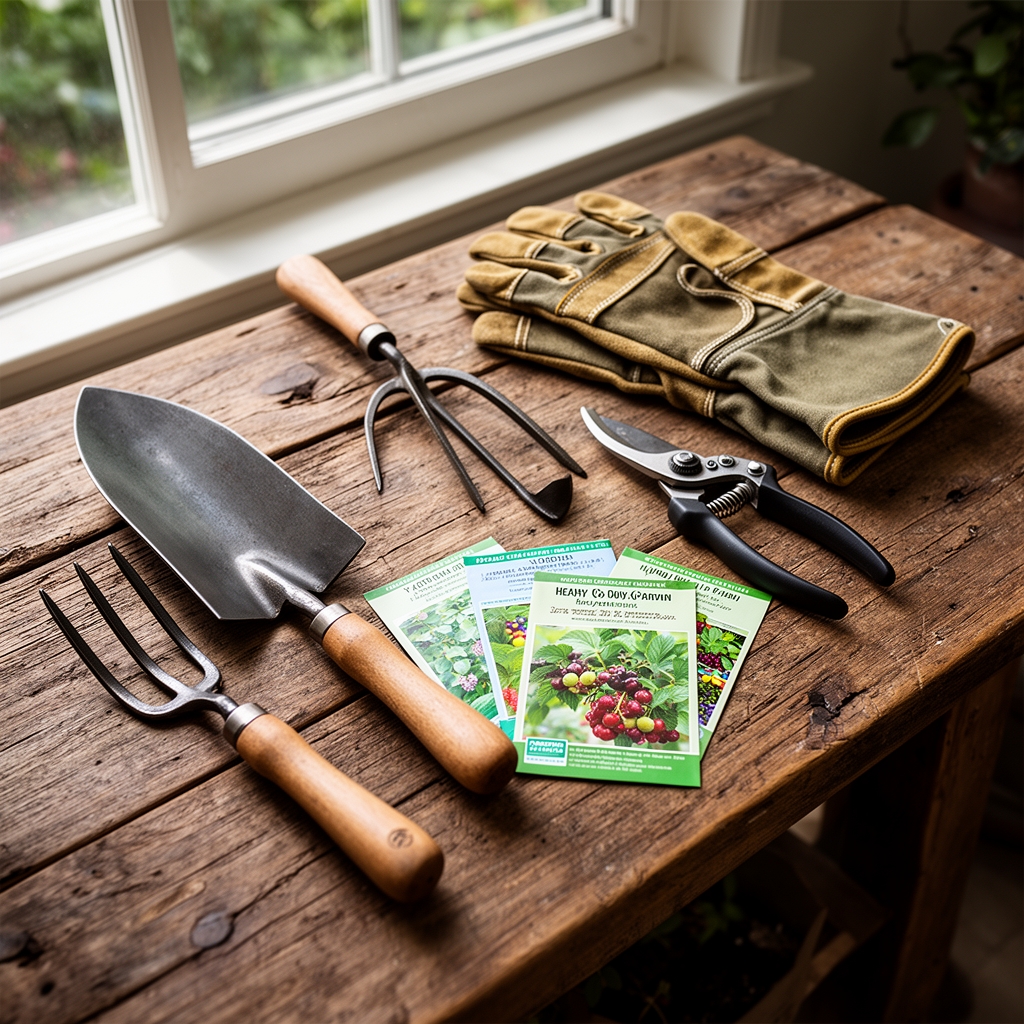
Berry crops require acidic to neutral pH ranges depending on species. Blueberries demand a pH between 4.2 and 5.2. Raspberries and blackberries tolerate 5.5 to 6.5. Strawberries prefer 5.8 to 6.5. Purchase elemental sulfur (90% pure) to lower pH or dolomitic limestone to raise it. A soil test reveals current pH, cation exchange capacity, and base saturation percentages.
Organic amendments include aged pine bark (particle size 0.25 to 0.5 inches), sphagnum peat moss, and well-composted manure. These materials improve drainage and increase humus content. For initial fertility, select a balanced organic fertilizer such as 4-4-4 or 5-5-5 derived from feather meal, bone meal, and kelp. Avoid synthetic high-nitrogen formulations that encourage excessive vegetative growth at the expense of fruit bud formation.
Mulch materials consist of shredded hardwood bark, pine straw, or aged wood chips. A layer 3 to 4 inches deep suppresses weeds and moderates soil temperature. Drip irrigation tubing (0.6 GPH emitters spaced 12 inches apart) delivers water directly to the root zone and reduces foliar disease pressure.
Timing
Site preparation should begin six months before planting. In Zones 5 through 7, this means starting in late summer or early autumn for spring planting. Zones 8 and 9 allow fall planting, so preparation occurs in late winter through early spring. The timing allows organic matter to decompose and soil pH adjustments to stabilize.
Soil tests processed in late summer return results before autumn rains compact the ground. Applying sulfur in September allows it to react with soil moisture and lower pH by the following March. Limestone applications require three to six months to alter pH measurably.
Frost-free dates anchor planting schedules. Bare-root berry plants enter the ground two to three weeks before the last expected frost in spring. Container-grown stock can be planted up to four weeks after the last frost. This window permits root establishment before summer heat stress.
Phases
Phase 1: Site Assessment and Clearing
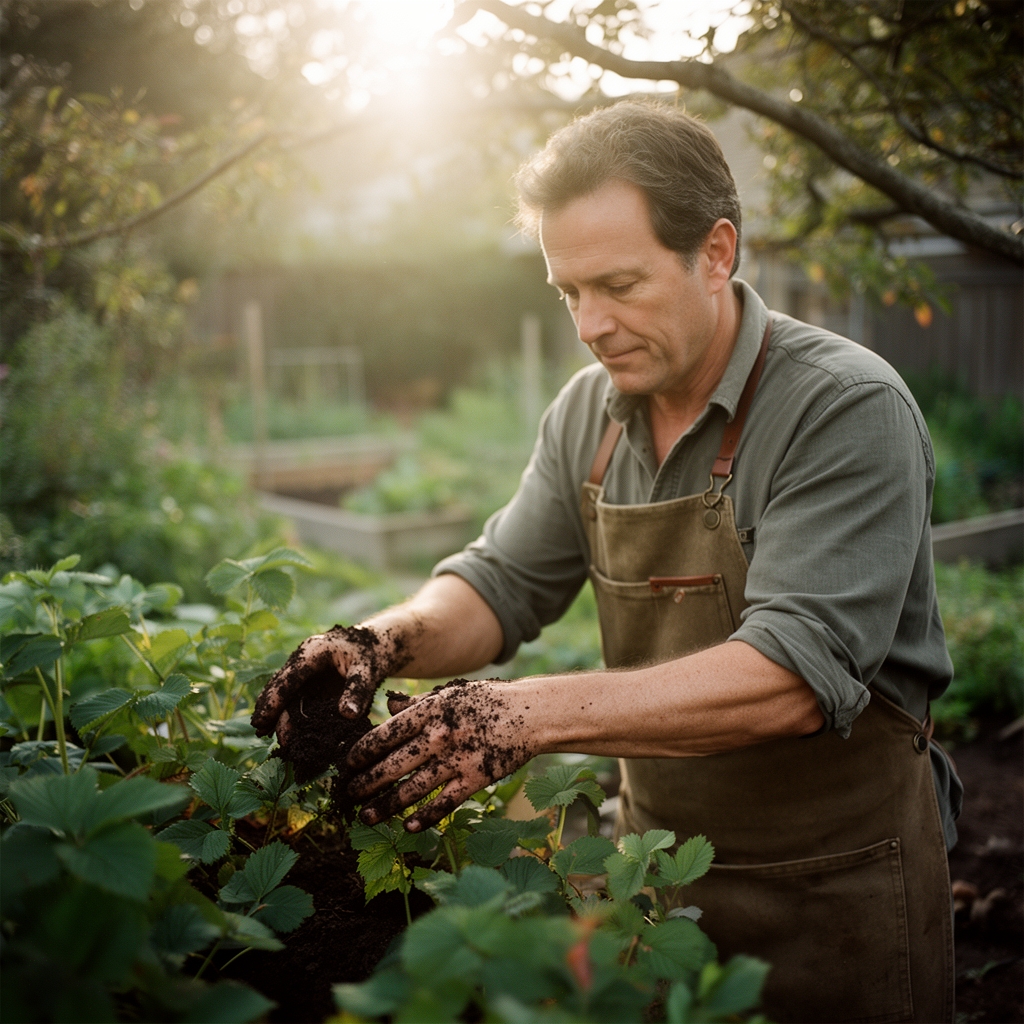
Remove all existing vegetation using a sod cutter or herbicide application. Perennial weeds such as quackgrass, bindweed, and Canada thistle require systemic herbicides containing glyphosate applied in late summer when plants translocate carbohydrates to roots. Till the area once weeds are dead, removing root fragments. Rake the surface smooth and mark the bed dimensions with stakes and string.
Pro-Tip: Apply mycorrhizal fungi inoculant (species Rhizophagus irregularis or Glomus intraradices) at a rate of 0.5 ounces per plant directly into the planting hole. These fungi colonize berry roots and increase phosphorus uptake by 30 to 50 percent.
Phase 2: Soil Amendment and Bed Construction
Spread a 2-inch layer of aged pine bark and a 1-inch layer of sphagnum peat moss over the bed. Incorporate elemental sulfur or limestone according to soil test recommendations. Typical sulfur rates range from 1 to 3 pounds per 100 square feet to lower pH by one full point. Till amendments to a depth of 10 to 12 inches. Construct raised beds 8 to 10 inches high and 3 to 4 feet wide to ensure adequate drainage.
Pro-Tip: Install drip irrigation tubing before mulching. Position emitters 6 inches from the plant crown to encourage lateral root spread rather than shallow rooting directly beneath the stem.
Phase 3: Pre-Planting Conditioning
Allow the bed to settle for four to six weeks. Water the area thoroughly twice during this period to encourage decomposition and allow soil organisms to colonize the amended profile. Apply a starter fertilizer at half the recommended rate one week before planting. This primes the root zone with available nutrients without risking salt burn on tender roots.
Pro-Tip: Prune raspberry and blackberry canes to 6 inches above the crown at planting. This forces auxin distribution into lateral buds and results in more uniform cane emergence.
Troubleshooting
Symptom: Interveinal chlorosis on blueberry leaves.
Solution: Soil pH has drifted above 5.5. Apply elemental sulfur at 0.5 pounds per plant, watered in thoroughly. Foliar-feed with chelated iron (Fe-EDDHA) at 2 ounces per gallon every two weeks until green color returns.
Symptom: Strawberry crowns rot at soil line.
Solution: Raised beds are not draining. Rebuild beds to 12 inches high. Incorporate coarse sand (particle size 0.5 to 2 mm) at 20 percent by volume to increase macropore space.
Symptom: Raspberry canes wilt suddenly in June.
Solution: Raspberry crown borer larvae are tunneling in crowns. Remove and destroy affected canes. Apply parasitic nematodes (Steinernema feltiae) at 50 million per acre in early September when larvae are active near the soil surface.
Symptom: Blackberry leaves show purple blotches with gray centers.
Solution: Anthracnose fungus is present. Prune out infected canes. Spray copper hydroxide (1.5 pounds per 100 gallons) at bud break and repeat every 10 days through bloom.
Symptom: Strawberry plants produce many runners but few berries.
Solution: Excessive nitrogen promotes vegetative growth. Reduce fertilizer to 0.5 pounds of actual nitrogen per 1,000 square feet per year. Remove all runners until plants are fully established.
Maintenance
Water berry patches to deliver 1 to 1.5 inches per week during fruit development. Drip irrigation applied three times per week maintains consistent moisture without wetting foliage. Apply 0.25 pounds of actual nitrogen per 1,000 square feet in early spring and again after harvest.
Renew mulch annually to maintain a 3-inch depth. Pull mulch 2 inches away from crowns to prevent crown rot. Scout for aphids, spider mites, and Japanese beetles weekly during the growing season. Insecticidal soap (potassium salts of fatty acids at 2 percent concentration) controls soft-bodied insects without harming beneficial predators.
Prune summer-bearing raspberries immediately after harvest, removing all floricanes at ground level. Everbearing raspberries can be mowed to 2 inches in late winter for a single fall crop. Strawberry beds require renovation in July: mow foliage to 1 inch, narrow rows to 12 inches, and apply 0.5 pounds of 10-10-10 per 100 square feet.
FAQ
How deep should I till when preparing a berry patch?
Till to 10 to 12 inches to break up compacted layers and incorporate organic matter throughout the root zone. Shallow tilling (less than 6 inches) leaves hardpan intact and restricts drainage.
Can I plant berries in the same bed where tomatoes grew?
Avoid planting berries where tomatoes, peppers, or eggplants grew in the previous three years. These crops share Verticillium wilt pathogens that persist in soil and infect berry roots.
How much sulfur do I need to lower pH from 6.5 to 5.0 for blueberries?
Sandy loam requires 1.5 to 2 pounds of elemental sulfur per 100 square feet. Clay loam requires 2.5 to 3 pounds. Apply in two split applications six months apart to avoid shocking soil biology.
When should I expect the first harvest after planting?
Strawberries produce a small crop the first season if planted in early spring. Raspberries and blackberries fruit in the second year. Blueberries require three years to reach production, though some cultivars set light crops in year two.
What spacing is best for a mixed berry patch?
Blueberries need 5 feet between plants and 10 feet between rows. Raspberries and blackberries require 2 to 3 feet between plants and 8 feet between rows. Strawberries are spaced 12 to 18 inches apart in rows 3 feet apart.