8 Healthy Steps to Prune Indoor Herbs for Constant Harvest
The scent of fresh basil torn from a stem, the resinous bite of rosemary crushed between fingertips, the clean green snap of parsley stalks: these are the rewards of deliberate pruning. Following proven steps for pruning indoor herbs for harvest transforms a potted plant into a renewable crop that produces for months. Most gardeners approach shears timidly, fearing they will damage their herbs. In truth, strategic cuts trigger lateral branching through auxin redistribution, multiplying harvest points and preventing the leggy, flowering decline that ends productivity.
Materials and Soil Chemistry
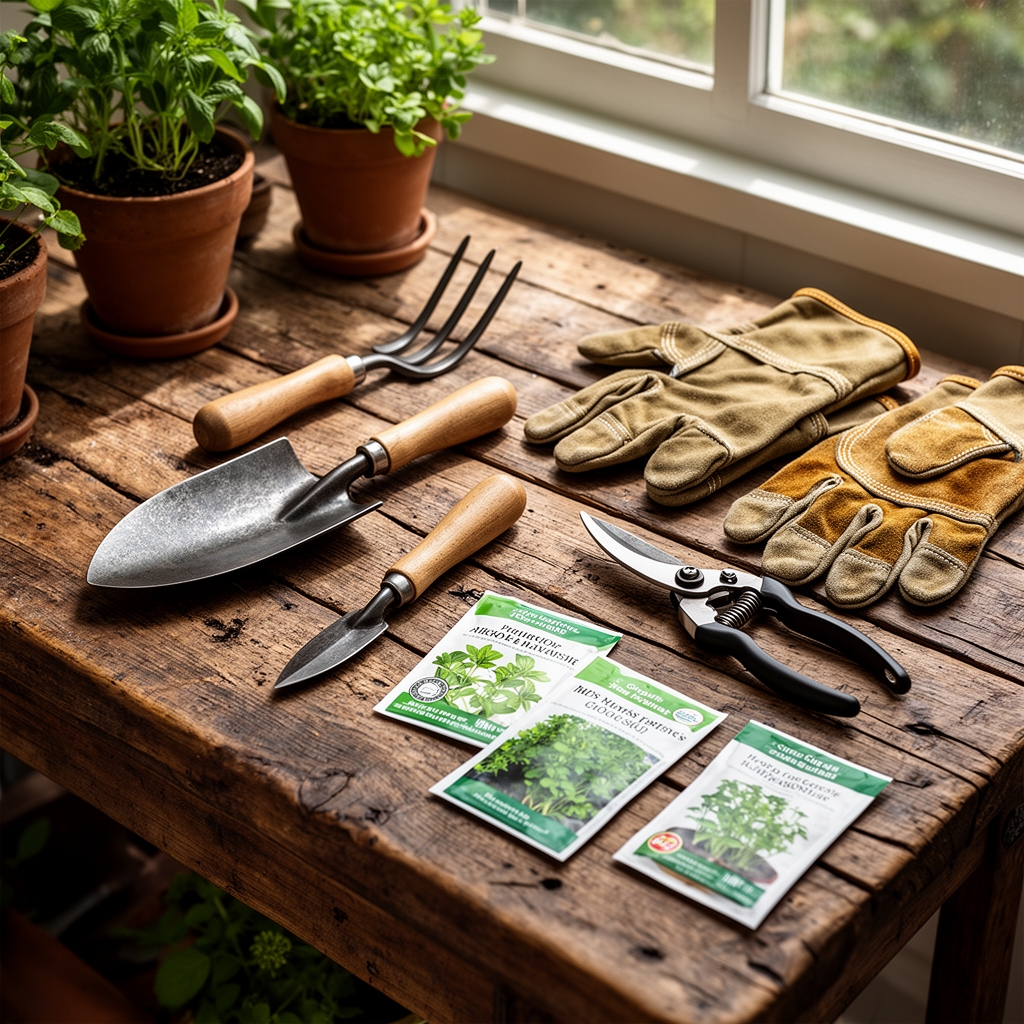
Sharp bypass pruners with blades sterilized in 70% isopropyl alcohol prevent the spread of bacterial soft rot and fungal pathogens. A 6-inch potting medium blend at pH 6.0–6.8 suits most culinary herbs. Incorporate a 4-4-4 organic fertilizer at planting to supply nitrogen, phosphorus, and potassium in equal measure. This ratio supports vegetative growth without excessive nitrogen that triggers bolting. Add worm castings at 10% by volume to raise cation exchange capacity, allowing roots to access micronutrients over time. For Mediterranean species like thyme, oregano, and rosemary, amend with coarse perlite at 30% by volume to replicate the fast-draining soils of their native range. Mycorrhizal fungi inoculant applied to root zones at transplanting improves phosphorus uptake, particularly in compact indoor containers where root space is limited.
Timing and Growth Cycles
Indoor environments eliminate frost concerns, but light duration remains critical. Herbs grown on south-facing windowsills in USDA Hardiness Zones 5–9 receive adequate photosynthetically active radiation from March through October. Supplemental LED grow lights rated at 6,500 Kelvin and delivering 200–400 micromoles per square meter per second extend the season year-round. Begin the first pruning session when seedlings or transplants reach 6 inches in height and have established at least three sets of true leaves. This typically occurs 4–6 weeks after sowing basil, cilantro, and parsley, and 8–10 weeks for slower woody perennials like rosemary and sage. Subsequent harvests can occur every 2–3 weeks once plants enter sustained vegetative growth, provided light, water, and nutrients remain consistent.
Phases of Pruning for Maximum Yield

Sowing and Early Establishment
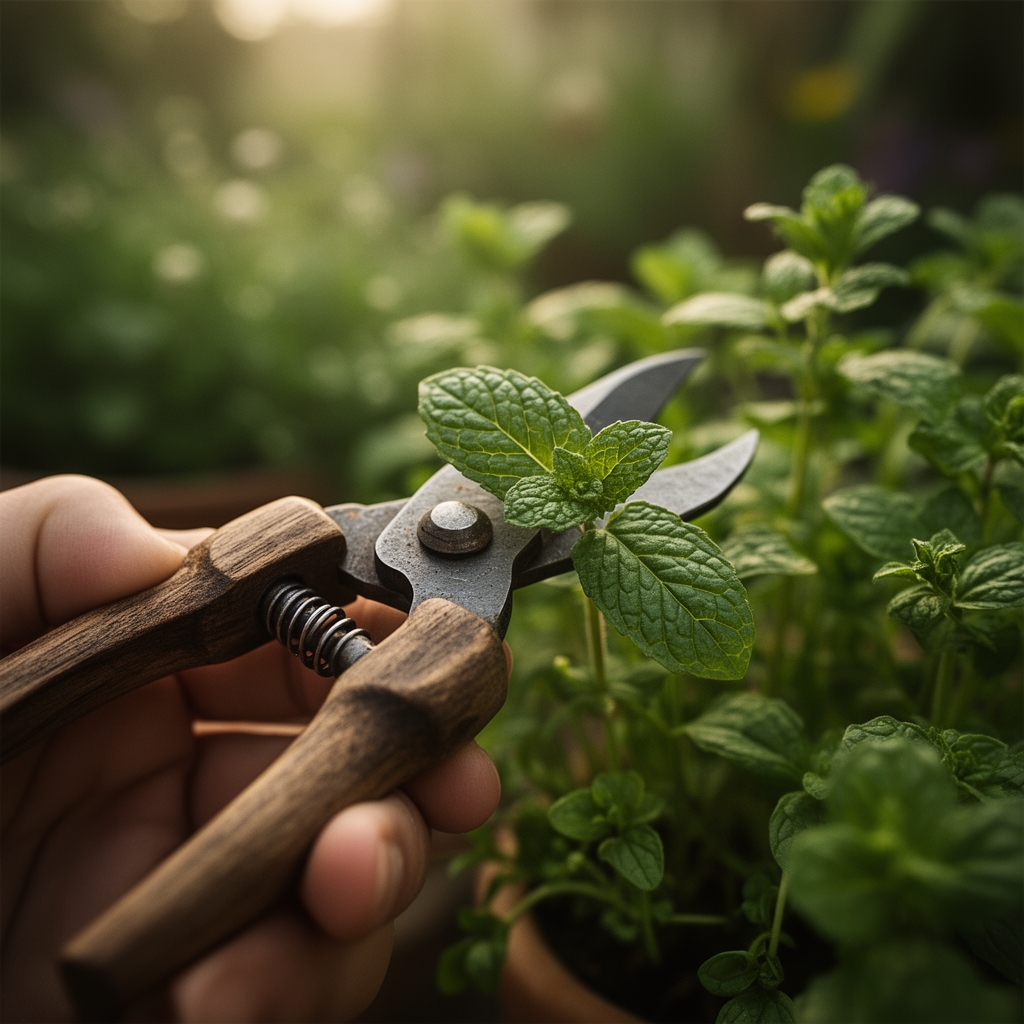
Pinch terminal buds at the first true leaf stage to encourage basal branching. Remove the growing tip just above a node, where lateral meristems lie dormant. This single cut forces the plant to redirect energy into side shoots, doubling potential harvest sites. For basil, pinching above the second set of leaves at 4 inches height prevents premature flowering and establishes a bushy architecture.
Pro-Tip: Use a 45-degree angle cut, slicing cleanly through the stem without crushing vascular tissue. This angle sheds moisture and reduces infection risk.
Transplanting and Structural Training
Once roots fill the starter container, transplant into a 6–8 inch pot with fresh medium. Prune lower leaves that touch soil to prevent fungal spores from splashing onto foliage during watering. Shape the canopy by removing inward-growing stems that block light penetration. Aim for an open vase structure that allows air circulation around all leaf surfaces. Hard prune rosemary and thyme by removing one-third of woody stem length after transplanting, stimulating new growth from dormant buds along older wood.
Pro-Tip: Dust cut rosemary stems with rooting hormone powder and insert into moist sand. Side cuttings from pruning sessions propagate clones with identical flavor profiles.
Establishing Harvest Rhythm
Harvest no more than one-third of total foliage mass per session. Cut stems above a node where two leaves emerge, promoting bifurcation at that point. Remove flower buds immediately when they appear on basil, cilantro, and dill, as flowering switches the plant into reproductive mode, reducing leaf quality and triggering senescence. For parsley, cut outer stems at the base, leaving the central crown intact to generate new growth. Woody perennials tolerate more aggressive pruning: remove entire branch sections back to main stems, forcing energy into dense regrowth.
Pro-Tip: Prune in the morning after stomata open but before midday heat stress. Wounds seal faster when turgor pressure is high and transpiration demand is moderate.
Troubleshooting Common Disorders
Symptom: Yellowing lower leaves with green veins.
Solution: Iron chlorosis caused by high pH. Drench soil with chelated iron sulfate and adjust future watering to pH 6.2.
Symptom: White powdery coating on leaf surfaces.
Solution: Powdery mildew from poor air circulation. Increase spacing, reduce humidity below 60%, and apply dilute neem oil at 2 tablespoons per gallon weekly.
Symptom: Leggy stems with long internodes.
Solution: Insufficient light intensity. Move plants closer to light source or increase photoperiod to 14–16 hours daily.
Symptom: Black, water-soaked stems at soil line.
Solution: Damping-off fungi in overwatered media. Remove affected plants, reduce watering frequency, and apply Trichoderma harzianum biocontrol.
Symptom: Tiny white insects on undersides of leaves.
Solution: Whitefly infestation. Hang yellow sticky traps and spray with insecticidal soap at 2% concentration every 5 days for three cycles.
Maintenance Protocols
Water when the top 1 inch of potting medium feels dry to the touch, typically every 3–4 days in standard indoor conditions. Apply 0.5 inches of water per session, allowing excess to drain completely. Feed every two weeks with half-strength liquid fertilizer at 3-1-2 NPK ratio during active growth. Rotate pots 90 degrees weekly to ensure even light exposure and prevent phototropic leaning. Prune away any leaf matter that shows necrotic spots or stippling within 24 hours to limit pathogen spread. Repot annually into fresh medium to prevent salt buildup and nutrient depletion.
Frequently Asked Questions
How often should I prune basil indoors?
Every 2–3 weeks once the plant reaches 8 inches. Remove top sets of leaves above nodes to encourage branching and delay flowering.
Can I prune woody herbs like rosemary back to bare wood?
Avoid cutting into wood older than two years. Rosemary generates new growth poorly from ancient wood lacking dormant buds.
What NPK ratio works best for continuous herb harvest?
A 3-1-2 or 4-2-3 formula supplies adequate nitrogen for foliage without excess that causes soft, pest-prone tissue.
Why do my herbs flower quickly indoors?
Short day length or temperature fluctuations trigger bolting. Maintain 14+ hour photoperiods and stable temperatures between 65–75°F.
Should I compost pruned herb stems?
Yes, unless they show signs of disease. Healthy trimmings add green nitrogen-rich material to compost piles and break down rapidly.