7 Best Plant Ties for Indoor Climbing Vines and Creepers
Indoor climbing vines transform vertical spaces with minimal floor area, but their success depends entirely on the best plant ties for indoor climbing vines that secure growth without damaging stems. A pothos stem crushed by wire develops necrotic tissue and ceases auxin distribution. A monstera aerial root constrained by rigid nylon fails to anchor properly, causing the entire plant to lean and stress at the base. The right ties support growth without restricting vascular cambium or causing girdling injuries that invite fungal pathogens.
Materials and Specifications
Velcro Plant Ties (Reusable Fabric Straps)
These adjustable loops consist of hook-and-loop fastener material that expands as stems thicken. They excel for fast-growing climbers like philodendrons and golden pothos that add 6–12 inches monthly during active growth. The soft fabric prevents bark abrasion and distributes pressure across 0.5–1 inch of stem circumference. Standard 0.5-inch width handles stems up to 0.75 inches diameter. No NPK application needed, though fertilizing tied plants with 3-1-2 liquid feed every two weeks during spring and summer maintains vigorous growth.
Jute Twine (Natural Fiber)
Biodegradable jute provides temporary support for annual vines or plants you plan to retrain seasonally. Its rough texture prevents slippage on smooth stems but can harbor moisture, creating microenvironments favorable to Botrytis cinerea at relative humidity above 70%. Use 3-ply thickness for stems under 0.25 inches, 6-ply for woody climbers like jasmine. The natural material decomposes within 18–24 months in typical indoor conditions at pH 6.0–6.5. Pair with balanced 10-10-10 fertilizer for heavy feeders.
Soft Wire with Paper or Foam Coating
Coated wire ties offer precise positioning for training stems along trellises or moss poles. The internal wire holds shape while outer padding protects cambium tissue. Ideal for plants requiring specific light exposure angles, such as hoya species needing 4–6 hours of indirect bright light. Wire diameter of 18–20 gauge supports most indoor vine weights. Coating thickness of 2mm minimum prevents direct metal contact that can create cold spots during winter near windows.
Silicone Plant Ties
UV-resistant silicone remains flexible across temperature ranges from 40–90°F without brittling. These ties suit sun rooms and south-facing windows where temperature fluctuates. The non-porous surface resists bacterial colonization and rinses clean. Use for high-value specimens like variegated monstera where infection risk must stay minimal. Silicone's elasticity accommodates stem expansion during rapid spring growth when internode length increases 30–40% compared to winter dormancy.
Tomato Clips (Plastic Reusable Clips)
Originally designed for vegetable production, these clips snap onto support stakes and cradle stems in a C-shaped grip. They work exceptionally well for training vining philodendrons onto coir or sphagnum moss poles. The gap prevents compression while maintaining contact with the support structure. Clips rated for 0.5-inch stem diameter fit most indoor climbers. Sterilize between uses with 10% bleach solution to prevent cross-contamination of pathogens.
Garden Tape (Flexible Stretch Tape)
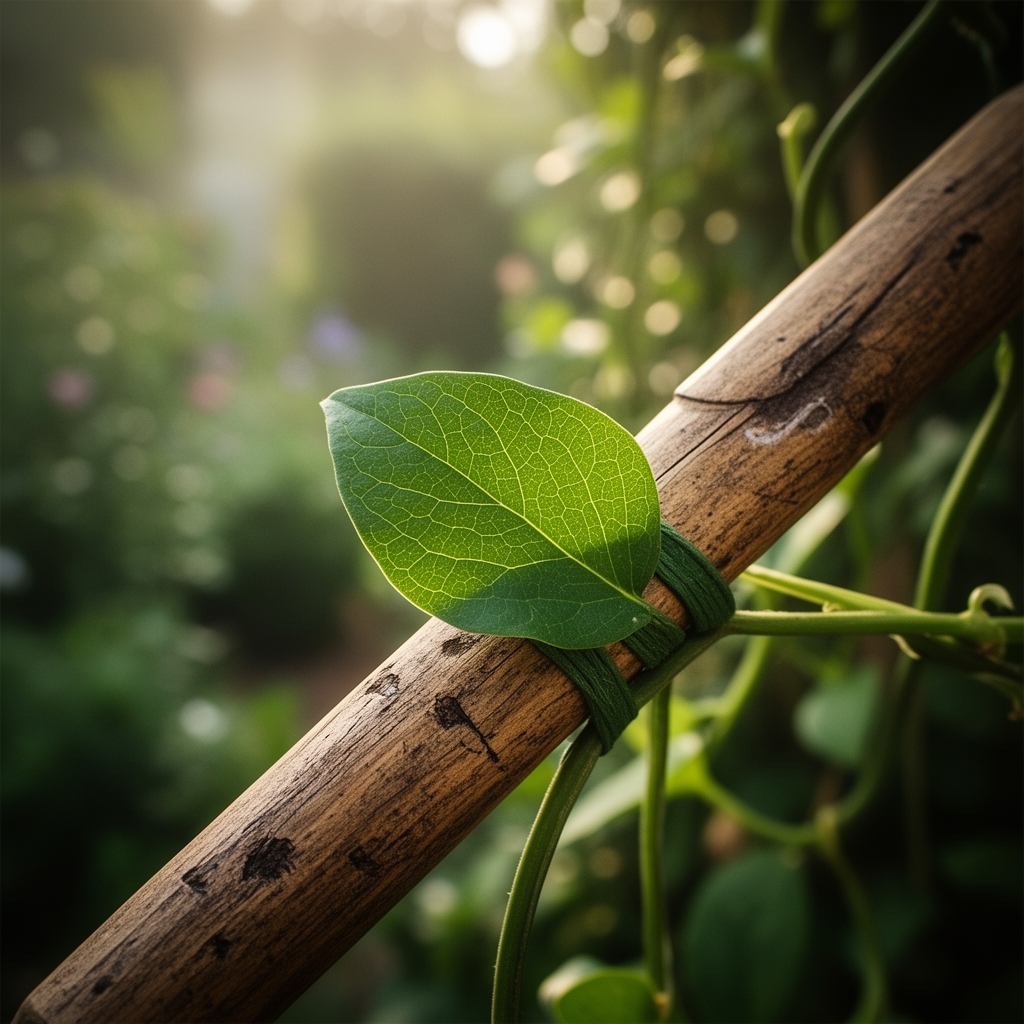
Stretchable green tape blends visually with foliage while expanding with growth. It adheres to itself without adhesive residue on plant tissue. Width of 0.5 inches distributes hold force adequately for herbaceous vines. The material degrades under sustained UV exposure, so replace every 8–12 months in bright indirect light situations. Suitable for delicate stems under 0.4 inches diameter where harder ties might cause scarring.
Bamboo Rings with Adjustable Closures
Split bamboo rings with wire closures provide eco-friendly support for medium to large climbers. The natural material matches organic growing systems and complements substrate amendments like composted bark mulch or worm castings at 2-inch top-dressing depth. Ring diameters from 2–6 inches accommodate various stem sizes. The porous bamboo allows air circulation, reducing condensation-related issues in humid environments above 60% relative humidity.
Timing and Environmental Windows
Install ties during active growth phases when auxin production peaks and stems show maximum flexibility. For most tropical climbers grown indoors, this occurs from March through September in USDA Hardiness Zones 3–8. Temperature stability between 65–75°F promotes cell wall plasticity, reducing breakage risk during training. Avoid tying during winter dormancy when lignified tissue becomes brittle and snaps under manipulation.
Plants entering new growth cycles require tie inspection every 14 days. Stems can increase diameter by 15% monthly during peak growth, causing previously loose ties to constrict. Check tie placement 2 inches below nodes where vascular bundles concentrate. Girdling at these points interrupts nutrient flow and causes leaf chlorosis within 7–10 days.
Growth Phase Management

Establishment Phase (Weeks 1–6)
Position initial ties 8–10 inches apart along the support structure. This spacing prevents stem sagging while allowing natural climbing behavior to develop. Tie looseness should permit insertion of one finger between stem and support. Water with 1 inch per week, adjusting for substrate drainage rate. Peat-based mixes with 40% perlite require more frequent watering than coco coir blends.
Pro-Tip: Apply mycorrhizal fungi inoculant at 1 teaspoon per gallon of substrate during establishment. Glomus species colonize roots within 3–4 weeks, improving phosphorus uptake by 30–40% and enhancing drought tolerance.
Vertical Training Phase (Weeks 7–16)
Add ties every 6 inches as new growth extends. Train stems at 60–75 degree angles from horizontal to optimize light interception across leaf surfaces. Sharper angles reduce photosynthetic efficiency by 20% due to leaf self-shading. Feed with liquid fertilizer at 200 ppm nitrogen every 10 days. Monitor electrical conductivity to keep substrate EC between 1.2–1.8 mS/cm for optimal nutrient availability.
Pro-Tip: Prune lateral shoots at 45-degree angles 0.25 inches above nodes to encourage upward growth concentration. Clean pruning tools with 70% isopropanol between cuts to prevent viral transmission.
Mature Support Phase (Week 17+)
Transition to maintenance mode with tie inspections monthly. Mature stems develop secondary growth and lignification, becoming self-supporting on aerial roots or tendrils. Remove lower ties once adventitious roots contact the support structure and show active growth. These structures provide superior attachment compared to artificial ties and improve water uptake from humid air.
Pro-Tip: Mist aerial roots with water pH-adjusted to 5.5–6.0 three times weekly. This practice enhances nutrient absorption and encourages root proliferation along support surfaces.
Troubleshooting Common Issues
Symptom: Yellowing leaves immediately above tie points with brown streaking in petioles.
Solution: Tie constriction has blocked phloem transport. Remove tie immediately and replace with next-size-larger option. Apply kelp extract foliar spray at 1 tablespoon per gallon to supply cytokinins that stimulate recovery growth. Recovery typically requires 10–14 days.
Symptom: Stem breakage at tie contact points during routine handling.
Solution: Lignification is insufficient for current tie pressure. This occurs when nitrogen exceeds 150 ppm in fertilizer solutions, promoting soft growth. Reduce nitrogen to 100 ppm and supplement with potassium at 200 ppm to strengthen cell walls. Replace broken ties with softer velcro or silicone alternatives.
Symptom: White cottony growth accumulating under tie material.
Solution: Mealybugs exploit protected microhabitats created by ties. Remove ties and wash stems with insecticidal soap at 2% concentration. Inspect weekly for 4 weeks as eggs hatch on 7-day cycles. Switch to clips or wire ties that minimize contact area and improve air circulation.
Symptom: Ties sliding down stems despite proper installation.
Solution: Waxy cuticle layers on species like hoya reduce friction. Rough stem surface gently with fine sandpaper (220 grit) at tie points to improve grip without damaging epidermis. Alternatively, use tomato clips that mechanically grip rather than rely on friction.
Symptom: Purple-black lesions developing at tie contact points with progressive wilting.
Solution: Fusarium stem rot exploits wounds created by tight ties. Remove infected tissue 1 inch below visible damage using sterile tools. Drench substrate with copper fungicide at labeled rate. Improve air movement to 50–100 CFM and reduce relative humidity below 55% to suppress further infection.
Maintenance Protocols
Inspect all ties bi-weekly during active growth, monthly during dormancy. Loosen ties showing stem compression marks or deformation. Replace ties annually even without visible wear as material fatigue reduces elasticity. Clean reusable ties with dish soap and hot water every 8 weeks to remove salt accumulation and organic debris.
Water established climbing vines with 1–1.5 inches per week, delivering moisture when top 2 inches of substrate reaches 40% moisture content as measured by moisture meter. Adjust for seasonal changes in transpiration. Plants near heating vents or in south-facing windows require 30% more water during winter.
Feed with balanced fertilizer at half-strength weekly rather than full-strength monthly. This approach maintains steady nutrient availability without salt buildup. Flush substrate every 8 weeks with water volume equal to 2x container size to leach accumulated salts. Target substrate EC below 2.0 mS/cm post-flush.
Rotate plants 90 degrees monthly to promote even growth and prevent phototropic leaning. Adjust ties after rotation to maintain proper stem angles. Prune excessive growth to maintain desired form, removing no more than 25% of total leaf area per session to avoid stress.
Frequently Asked Questions
How tight should plant ties be for climbing vines?
Insert one finger easily between tie and stem. Proper tension secures without compressing cambium tissue. Check tension weekly during rapid growth phases as stems expand 10–15% monthly in spring.
Can I use twist ties for indoor climbing plants?
Avoid paper-coated wire twist ties as exposed wire cuts through expanding stems. Use only fully-coated versions with 2mm minimum padding thickness. Replace every 4–6 weeks as they lose shape retention.
When should I move ties up as my vine grows?
Add new ties every 6–8 inches of vertical growth. Leave lower ties in place until aerial roots or tendrils establish secure contact with support structure, typically 4–6 weeks after initial attachment.
Do different vine types need different tie materials?
Herbaceous soft-stemmed vines like pothos require fabric or silicone ties. Semi-woody climbers such as jasmine tolerate coated wire. Fully woody species like climbing figs need rigid clips that won't deform under stem weight.
How do I prevent tie marks on valuable plants?
Use widest practical tie width to distribute pressure. 0.75–1 inch ties reduce contact pressure by 40% compared to 0.25-inch options. Inspect every 10 days and adjust before compression marks appear as permanent scarring.